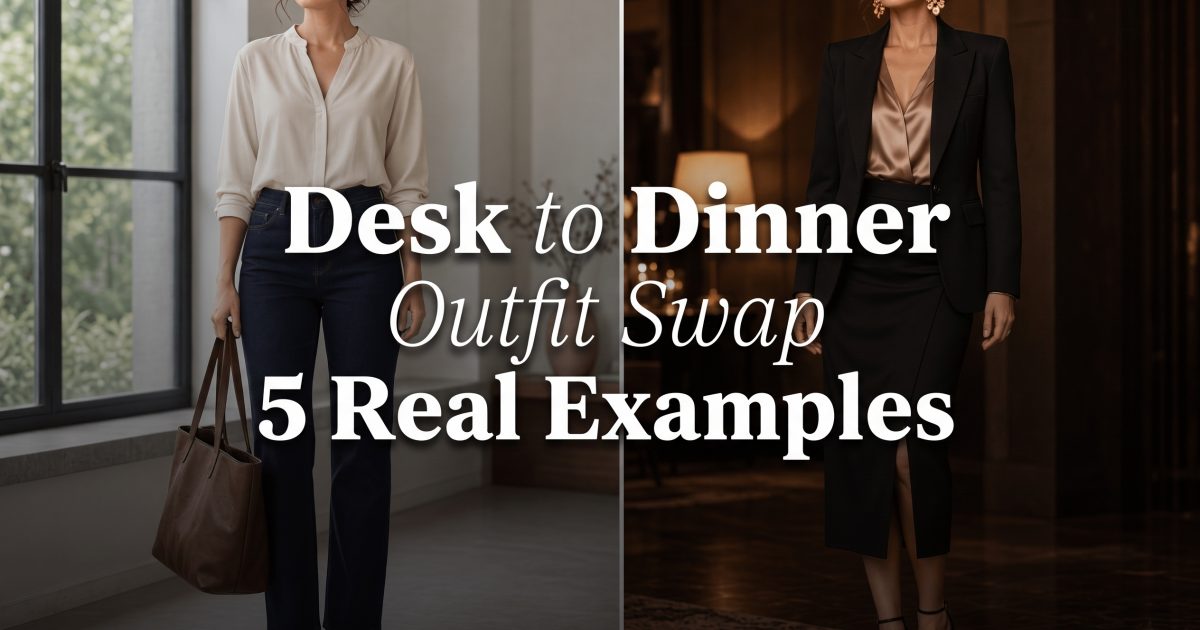
Desk to dinner outfit swap is the easiest way to turn one normal weekday look into something worth going out in. The trick is simple: keep the base outfit steady, then change the shape, shine, and shoe line so the same clothes feel sharper after dark.
That idea is already showing up in fashion coverage from Who What Wear and ELLE. For the image side, the edits here were built with xAI’s Imagine docs, which support tighter image control and reference-guided work.
- Why the desk to dinner outfit swap works
- Five desk to dinner outfit swap examples
- What to change first
- Prompt notes for cleaner edits
- How to pick the best version
Why the desk to dinner outfit swap works
The best desk to dinner outfit swap does not start from scratch. It starts with a safe outfit that already works in daylight. Then it adds one or two signals that read as evening: a cleaner neckline, richer fabric, stronger shoes, or a more defined waist. That is why the result feels believable. It still looks like the same person, just better dressed for the second half of the day.
This kind of swap matters because most wardrobes are built around repeat pieces. A blazer, straight trousers, a knit top, and a good bag can handle a workday, a commute, and dinner. The difference is in the finishing layer. Swap the flat shoe for a heel or boot. Trade a tote for a smaller bag. Replace a soft top with something that catches light. The whole look moves up a level fast.
It also helps to keep the face and hair calm. When the outfit does more work, the styling can stay simple. That balance keeps the image from feeling overdone. It also makes the before/after read clearly on a phone screen, which is the whole point.
Five desk to dinner outfit swap examples
Here are five versions that work because each one keeps a clear before and after. The base look stays believable. The after look feels intentional.
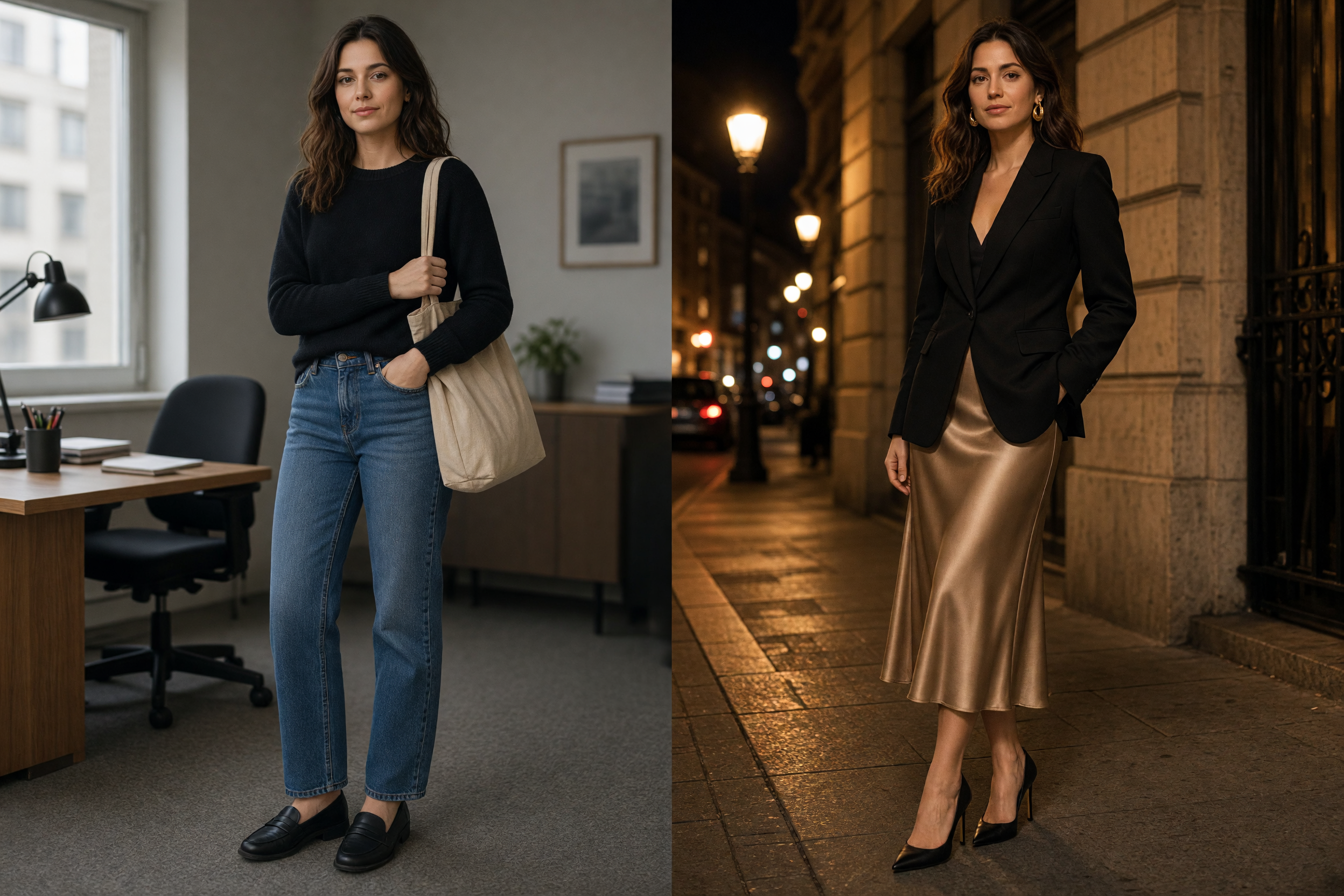
Start with the safest version when the base outfit is casual. A black knit, straight jeans, and loafers are fine for the day. At night, the same pose reads differently with a blazer, a satin skirt, pointed heels, and earrings that catch light. The look stays minimal, but it feels finished.
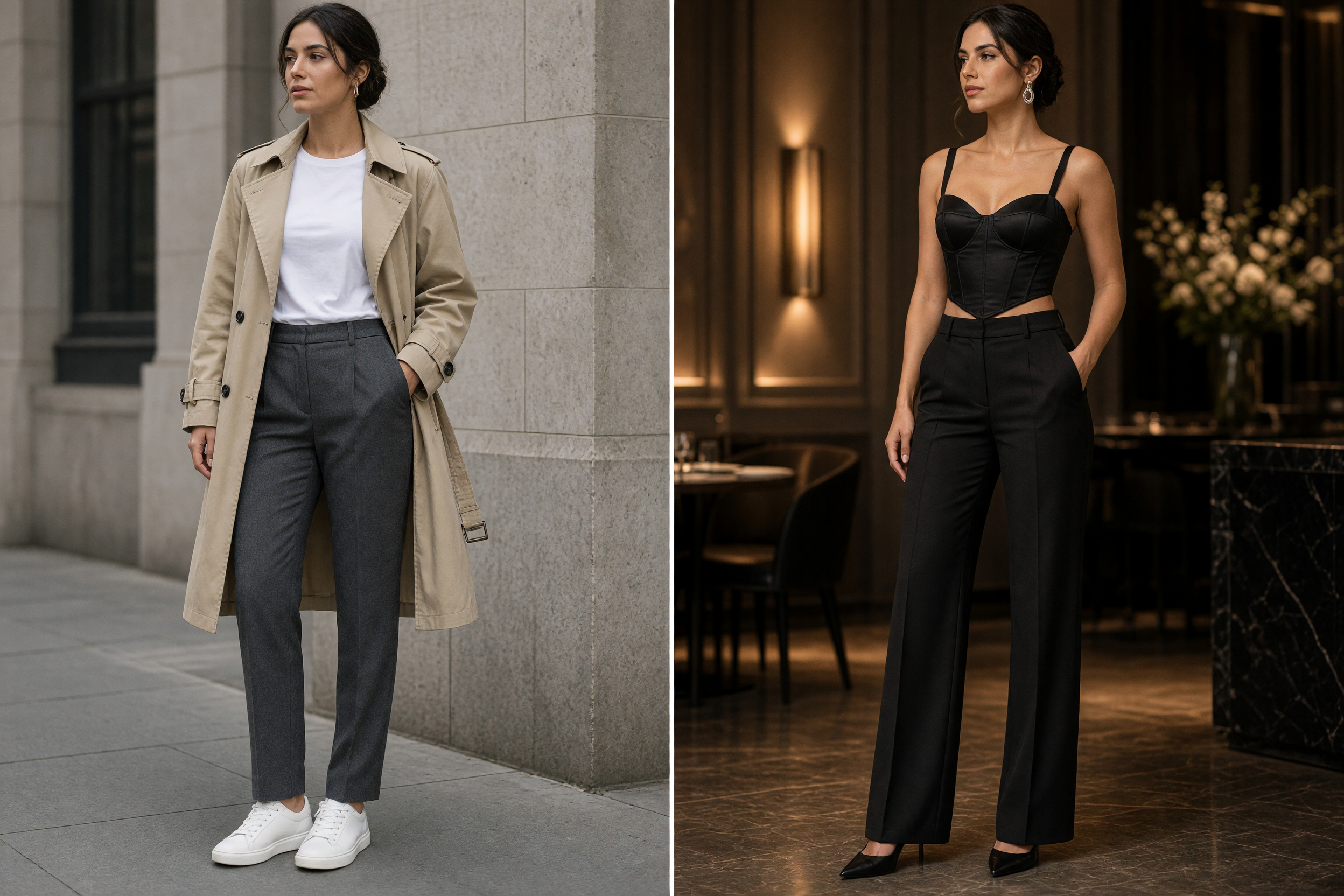
This version works well for people who like clean lines. A white tee and charcoal trousers already have structure, so the swap should add polish rather than drama. A corset top, wide-leg pants, pointed heels, and silver earrings create that after-hours finish without changing the whole mood of the outfit.
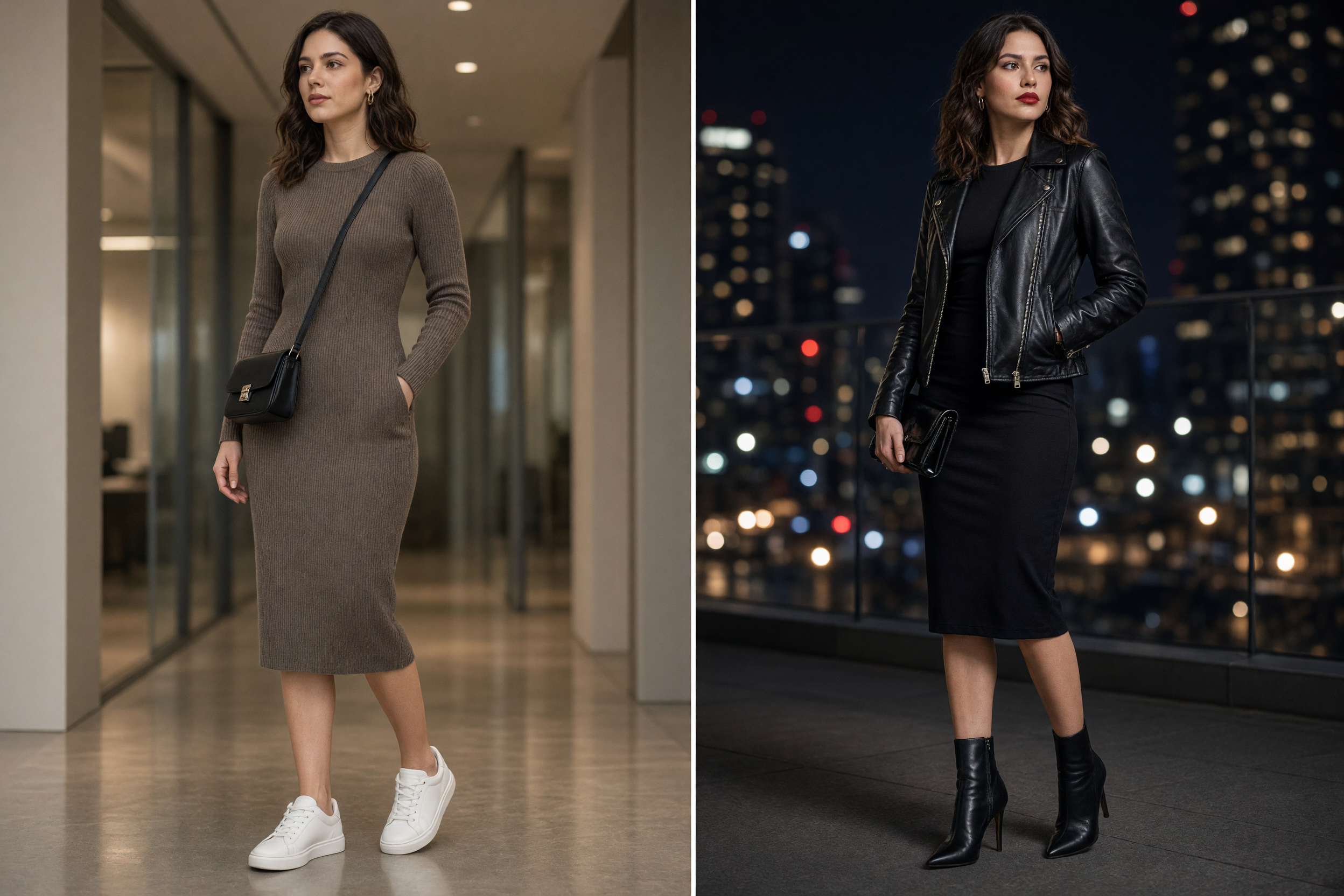
This one is good for an outfit that already feels neat. A fitted knit dress can go either way. Daytime styling keeps it easy with sneakers and a crossbody bag. Night styling adds edge through a leather jacket, heeled boots, and a glossy clutch. The shape barely changes. The attitude does.
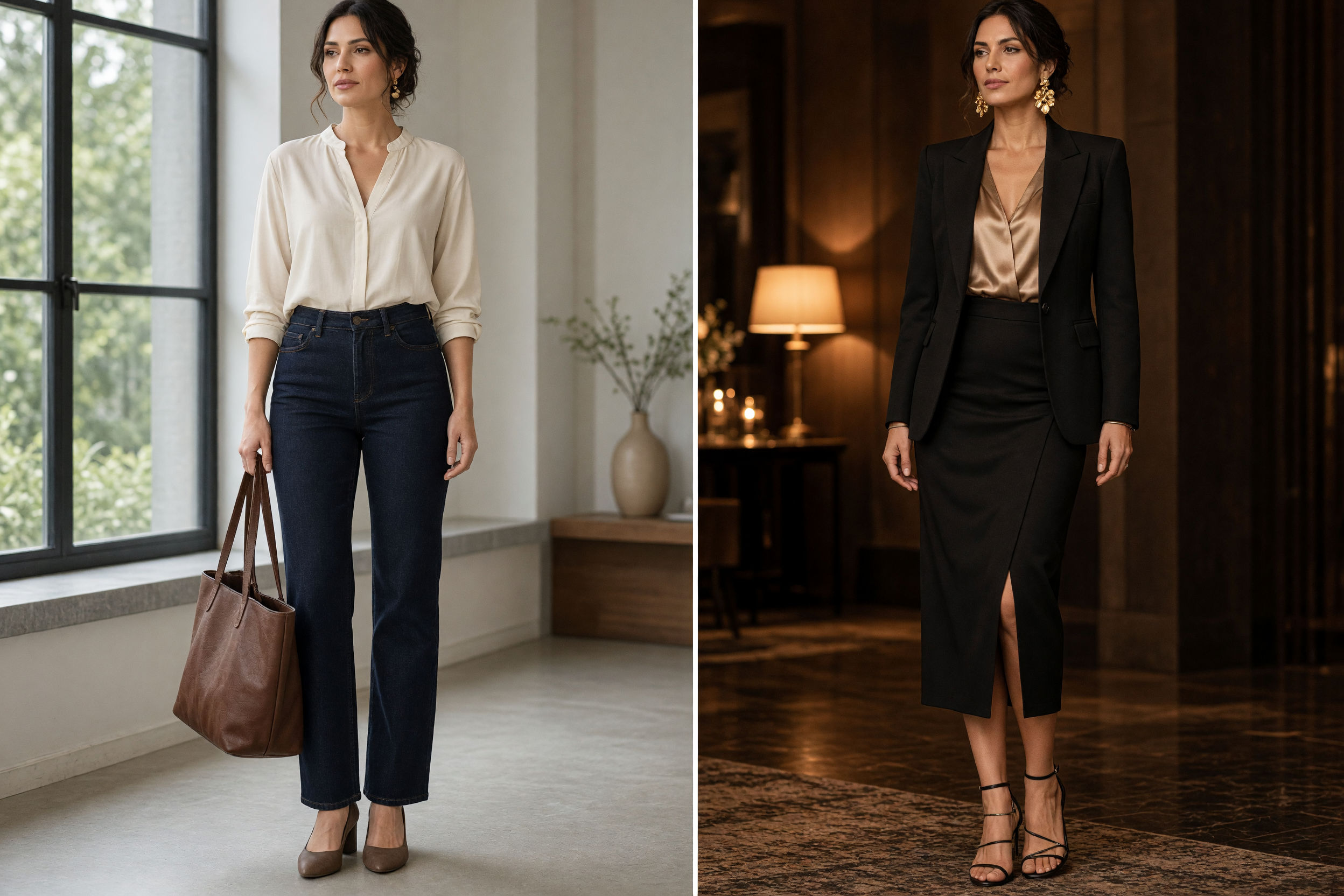
When the base outfit feels too soft, add contrast. Cream blouse, dark jeans, and a tote can look nice but forgettable. A black blazer, satin blouse, and darker skirt pull the look into evening mode right away. This is the most useful version for a quick change before plans.
The fifth example is the easiest to copy. Keep the same top, but replace the bottom half and shoes. That single move can be enough if the top already feels polished. A sharper hemline usually does more than a pile of accessories.
What to change first
If a desk to dinner outfit swap feels flat, change the silhouette first. The biggest shift usually comes from the bottom half. Jeans become a skirt. Wide trousers become a narrower line. Sneakers become a heel or boot. Once the shape is better, the rest of the styling falls into place.
After that, change the finish. Matte cotton reads daytime. Satin, leather, and smooth knits read later. Even one glossy piece can make the outfit feel ready for dinner. A satin blouse, leather jacket, or polished shoe brings more impact than adding another necklace.
Accessories should support the swap, not compete with it. A smaller bag helps. So do earrings with a bit of shine. If the outfit already has strong structure, skip extra extras. The cleanest looks are usually the ones that feel almost obvious once they are done.
Prompt notes for cleaner edits
For image edits, clarity beats complexity. A prompt like office outfit to dinner outfit works only when the base look is specific. Describe the starting clothes, the after clothes, and the lighting change. Keep the pose steady. Keep the framing steady. That way the swap reads as styling, not a whole new scene.
The official Imagine docs note support for image editing and multi-image workflows, which is useful when a look needs stronger consistency. That is why the examples here keep the body language calm and the backgrounds simple. The outfit should be the star.
Small details help a lot. Ask for the same model, the same pose, and a clean side-by-side layout. Mention realistic fabric, natural skin texture, and clear shoes. If the output starts getting busy, strip it back. One strong change is better than three weak ones.
How to pick the best version
The strongest desk to dinner outfit swap is the one that feels wearable, not the one with the biggest jump. If the after look looks too formal, it stops feeling useful. If the change is too tiny, it does not feel like a swap at all. The sweet spot sits in the middle.
Look for three things: a clearer waist, a better shoe line, and one richer fabric. If those are in place, the outfit will usually work. That is true in real life and in the image tests above. The best result is the one that looks easy to repeat tomorrow.
For readers saving one version to try, the second and fourth examples are the most practical. They keep the base simple, then sharpen the outfit just enough. That is usually all a weekday look needs.
Get this look in FashionKit
Try these effects on your own photos — free to start.